


Robert Fisher
Staff Reporter
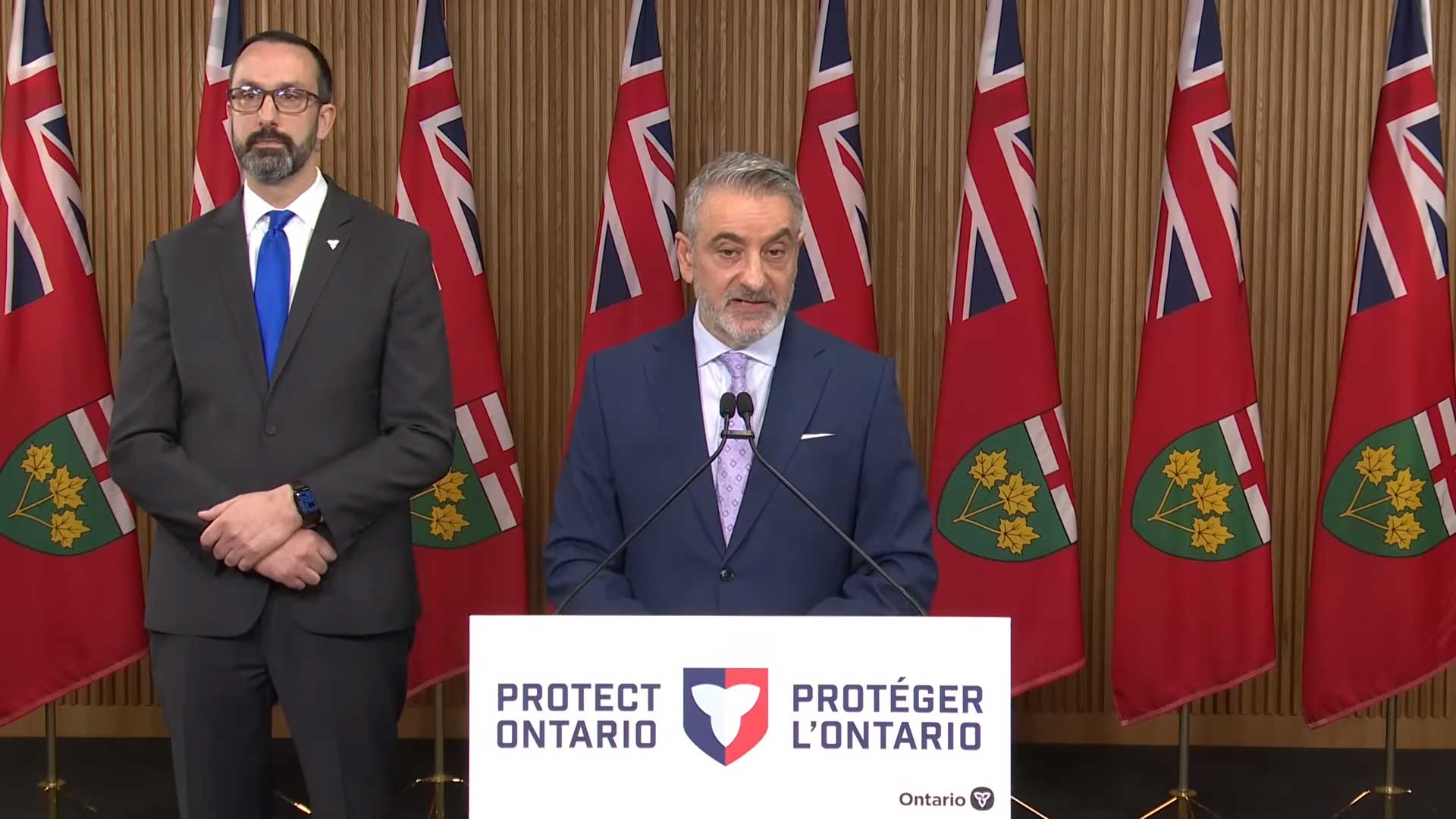
TORONTO – Education Minister Paul Calandra introduced legislation Monday to fundamentally change the way education is delivered across the province.
The Putting Student Achievement First Act, 2026 will, if passed, see a chief executive officer (CEO) appointed to each public and separate school board in the province. The CEO, “will be responsible for budgets, staffing and ensuring strong, accountable management,” said Calandra during a media conference at Queen’s Park. Boards will retain, “a qualified educator,” as chief education officer.
Calandra said the role of trustees at school boards will change “significantly.” The legislation would place caps on compensation and restrict the number of elected trustees to a maximum of 12. The legislation would also, “eliminate most expense accounts,” except for, “modest, clearly defined budgets in rural and remote boards.” Under the legislation, the province would cap honoraria for trustees at $10,000 per year.
Contract bargaining will come under the CEO and shift away from trustees. Calandra also said education funding would be spent where it “belongs” and end use of education funding for “external memberships and fees.”
The minister said the legislation would provide the province more discretion in, “the capital planning process when boards are unable to deliver projects in the best interests of students and educators.”
The Monday announcement follows on an announcement late last week to change teacher’s college programs to one year from two and the announcement earlier in the spring of a $750 expenditure card for home room teachers to purchase supplies.
Calandra is also changing how students complete exams. “Beginning next year, all high school students across all grades will complete final examinations during a dedicated exam period,” and the exams will count for a “meaningful” portion of the student’s grade. Final grades will include an evaluation of attendance (and) classroom participation, ensuring a more comprehensive evaluation of student performance.”
Calandra said the proposed legislation is a step in the process and represents more, “leadership from the Ministry of Education but it is not the final step,” and the government will continue to make changes as it feels necessary.
Only the Toronto District School Board has more than 12 trustees currently and the legislation will not allow for an increase for boards with fewer than 12.
Asked why he is keeping elected trustees when he has spoken in the past about eliminating them, Calandra said he wanted to remove, “the distractions that come from trustees,” and the revised trustee role will be, “significantly reduced from what it was.
“I will not hesitate to continue to look at the role of trustees should more refinement be needed,” he stated firmly. He also noted that some of the changes will only impact English-language boards and public boards because he doesn’t want to have to respond to Charter of Rights and Freedoms challenges from Catholic and French boards. He also said, in general, he needs to intervene less with the French boards because students in those schools perform better.
Calandra later clarified that his assumption is that current directors of education will assume the role of CEO via an application process and one of the existing superintendents will, likely, be elevated to the chief education officer and the change will have, “no financial impact.” Those taking on the new CEO role will need to have some business background.
Trustees will be able to make suggestions on the budget, however, not mandate changes. The board, collectively, will vote to approve or reject the budget proposed by a CEO. In the case where a board rejects the CEO budget, the ministry will make the final decision.
Leo Boland, chair of the Renfrew County District School Board said, in an email, “The good news is that the position of school board trustees in Renfrew County is staying, which means we can continue to bring the voice of students and parents to the board table.” He is unsure, given the newness of the announcement, what the changes to trustee roles will ultimately look like and will need time to review the legislation in more detail, writing, “We will need time to look at the finer details of the legislation to see exactly what it means. He remains focused, in the meantime, on “student achievement and well-being.”
Chair for the Renfrew County Catholic District School Board (RCCDSB), Bob Schreader, also sent a statement to the Gazette stating, “The Renfrew County Catholic District School Board stands in solidarity with the Ontario Catholic School Trustees’ Association today in expressing concern regarding the newly introduced,” legislation.
Schreader said he and his board share the objective of strong student achievement with the province, however, believe that is best achieved, “through local, democratically elected leadership.” He noted that RCCDSB students regularly outperform the provincial averages on standardized testing because, “our governance is rooted in the specific needs of our rural and small-town communities.”
The chair explained that his board and the broader trustee association is reviewing the legislation through four metrics: respect for constitutional and denominational rights; promoting academic excellence and faith formation; maintaining the board as the employer; and preserving a local voice in bargaining.
The government announcement, the statement reads, “suggests a move toward centralization that falls short of respecting,” the four metrics. “We remain hopeful for a meaningful dialogue with the minister and our local MPP to ensure that ‘modernization’ does not come at the expense of the constitutional rights and local voices that make Catholic education in Renfrew County so vibrant.”
robert@thevalleygazette.ca
About the Author


